When impersonation reaches the Prime Minister, it is a reminder for all of us
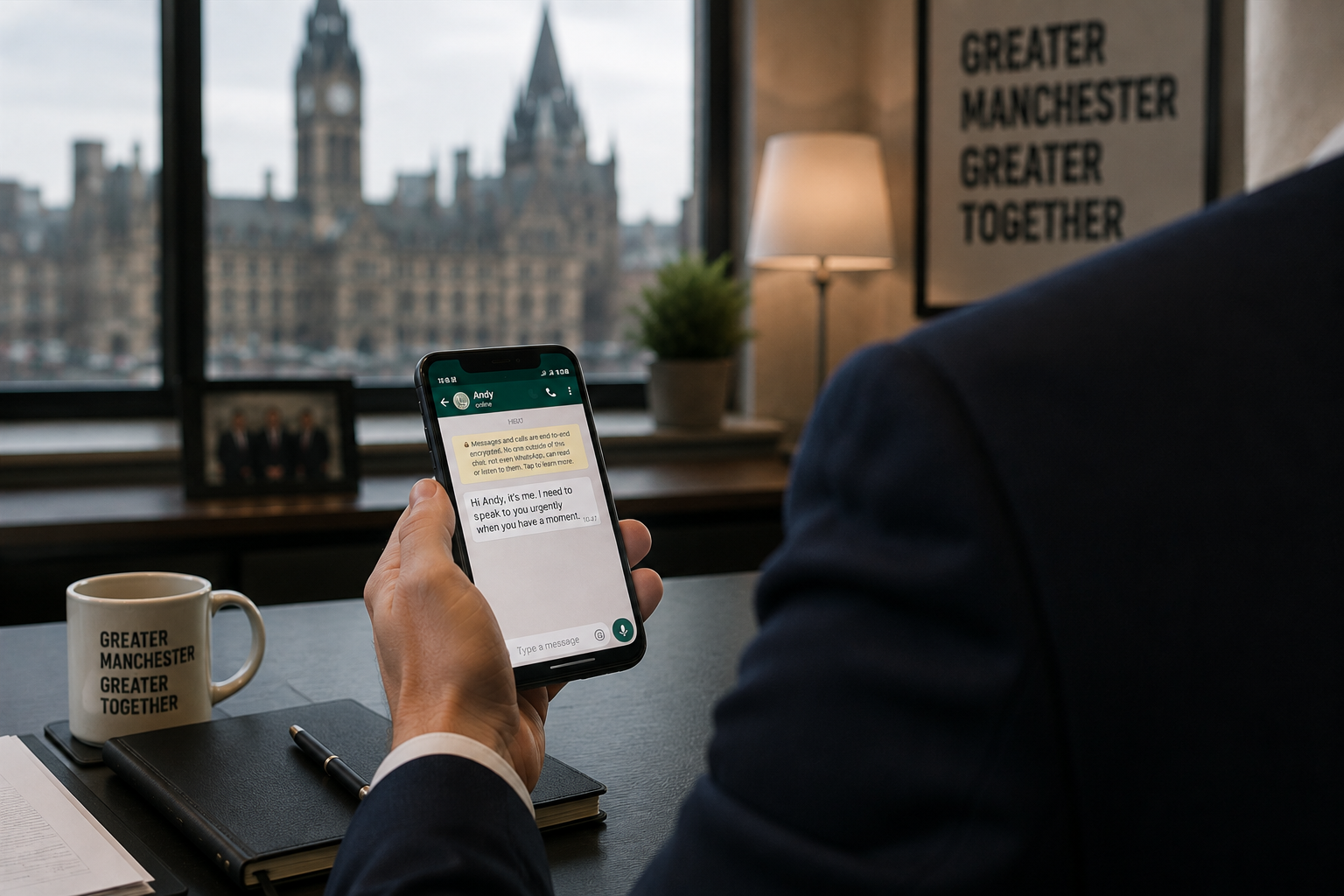
This week the Prime Minister, Andy Burnham, exchanged messages with someone impersonating a senior figure in the White House before he became suspicious. Downing Street would only say that it “does not comment on national security matters”, and the exchanges were reported to be of no significance. The impersonator, it later emerged, had been running the same trick on senior officials for months.
It is easy to file that under politics. It is really a story about proof.
Strip away the Westminster detail and what happened is the most ordinary scam in the world: someone posed as a person you trust, on a channel that looked legitimate, and got a conversation going before anyone thought to check. The only unusual thing is who it happened to. If an impersonator can reach a Prime Minister, surrounded by the best security advice in the country, the idea that ordinary caution will save the rest of us does not survive contact with reality.
The same move, closer to home
For a head of government the stakes are diplomatic. For a family they are personal, and the playbook is identical. A message from “your bank”. A panicked call in your daughter’s exact voice. A new number claiming to be your son, stranded and needing money right now. AI has made every one of these cheap and convincing, and the exposure is already wide.
We should be honest about scale. No consumer app is going to stop a determined, state-level operation aimed at a Prime Minister, and we are not going to pretend otherwise. But that is not the point of the story. The underlying move, impersonate a trusted contact and open a conversation before anyone verifies, is exactly the move used against ordinary people every day. And at that level, the defence is simple, and it is free.
What actually works
You cannot verify identity using the very thing being faked. Not the voice, not the number, not the display name. You can only verify it with something agreed in advance that an impersonator has no way to produce.
That is a safe phrase. Banks and the police already recommend agreeing one with your family. The catch with a word you pick once is that it can be forgotten in a panic, or overheard and then compromised for good. We walk through that trade-off in safe phrase vs safe word. The version that holds up is one that changes on its own, so there is nothing to memorise and nothing worth stealing.
That is what SafePhrase does. Everyone in your circle sees the same three-word phrase on their own phone, and it rotates every 60 seconds. On any urgent call or message, you ask for it. The real person reads it off their screen. An impersonator, however convincing, simply cannot. It is free on iPhone and Android, and setting up a circle takes a few minutes.
The Prime Minister’s office got a reminder this week that a familiar name is not proof. Your family can have the same reminder without the diplomatic incident. Agree your phrase now, and the next time something feels off, you will have one calm question ready. Go on then. SafePhrase them.
Give your family a way to be sure.
Set up your first SafePhrase circle in minutes. It’s free.